

Those of us who work in the world of internet companies sometimes forget that there are other new technologies that will be vital in the coming years and that are closely related to the internet because in the end, everything converges.
Reading a good article "Top 25 new fields for millennials" about technological trends, I thought it useful to review the list of 25 new technologies that we are seeing emerge and that will be strongly implemented from 2015 to 2050 and beyond.
If you have digital children born after the year 2000, I would encourage them to enter one of these fields professionally, as they are the ones with the most future potential.
As entrepreneurs, we need to stay up-to-date with new technologies, as they will be essential both for our future as business owners and for contributing to creating a better world.
Below is a list of new technologies to consider:
- Clean Energy. This is the biggest challenge. Energy sectors include: solar, wind, biofuels, bioenergy, carbon capture and storage, nuclear fusion, and battery storage (including plutonium and strontium batteries). These new energy sources will improve living conditions in developing countries.
- Nanotechnology is a new technology based on the manipulation of microscopic materials, allowing us to work with and manipulate molecular structures and their atoms. Thanks to nanotechnology, significant innovations are being developed in areas such as carbon nanotubes; water desalination using graphene; and 3D printing with claytronics, as well as major advances in medicine, surgery, and new industries that will transform a wide range of products.
- Cloud-based education. Companies like Coursera, Udemy, Udacity, Code Academy, and Skillshare, along with non-profit organizations like Khan Academy and edX, are enabling anyone in the world with a cloud connection to receive high-quality education from Harvard, Stanford, or MIT! Broadband internet access will reach places that currently lack it. Another example is the free MOOCs offered by Womenalia.
- Water Desalination. Thanks to recent research at MIT, graphene has been used to create a highly energy-efficient way to remove salt from water. As the human population grows, reaching 9.500 billion by 2050, this will guarantee access to clean drinking water for some communities that currently lack it. This is vital for improving health and nutrition, as well as for geopolitical stability.
- Mobile and PC convergence. Our smartphone will soon also be our PC. We'll simply need to connect our phone to an HDMI monitor to transform it into a full-fledged PC. Once smartphones are powerful enough to run Excel, there will be no reason to have a separate computer for a larger monitor. Already, in India, 59% of internet users access the internet exclusively via mobile. Furthermore, there are essential mobile applications for your business.
- Quantum Computing. In 2013, Google purchased a D-WAVE II Quantum Computer and, in collaboration with NASA, created the Quantum Artificial Intelligence Research Center (QUAIL). Unlike binary computers, where bits must be in either state 1 or state 0, quantum computers use superposition to allow all states between 0 and 1, enabling much faster processing. Studies of quantum particles will dramatically increase computer speed, thus accelerating the possibilities for researchers.
- The "Internet of Things," or cloud-connected devices. In the future, cloud-connected chips and sensors will be in everyday devices. It won't just be televisions, tablets, or mobile phones that are connected, but also heating systems, cars, refrigerators, pacemakers, and even this very special teddy bear.
- Contact Lens Smartphones (glasses that function as mobile phones). For example, the Google Glass project. Soon, in Spain, we will be able to browse the internet and communicate with friends through glasses, as is already beginning to happen in the US.
- Data storage. Recent work at Harvard has enabled data storage within DNA, storing 700 terabytes of data in a single gram of DNA. In 2012, IBM announced it could store one bit of data in as few as 12 atoms.
- Electronic devices and synthetic materials are being placed inside the human body. Pacemakers, cochlear implants (for hearing), bionic eyes, and synthetic organs already exist. This trend will accelerate in the coming years, enabling rapid advances in human health. However, numerous debates will arise regarding fundamental ethical issues and human rights. To learn more about this topic, I recommend watching the documentary *The Transcendent Man: The Singularity Is Near*.
- Artificial Intelligence. In 2011, the first Jeopardy! man-versus-machine competition took place, and IBM's Watson supercomputer defeated champions Ken Jennings and Brad Rutter. This was a much more challenging test for artificial intelligence than the one Deep Blue faced when it beat the world's best chess player, Garry Kasparov. Now, IBM is using Watson's technology to help doctors diagnose patients and brands connect with their customers.
- Synthetic Biology. Biology used to be solely the domain of nature. Now that humans have learned to edit the code of life, applications have emerged such as smart fuels, synthetic algae, synthetic food that can feed billions of people, altered stem cells that can extend life…
- Climate Engineering. David Keith and Andy Parker at Harvard are making significant advances in the field of climate engineering. One promising option for removing CO2 from the atmosphere is Bioenergy Carbon Capture and Storage (BECCS).
- “Brain Connectome,” or the study of the relationship between brain connectivity and human behavior, is now beginning to help us understand how brain neurons connect and work together to enable learning and memory. In 2013, the U.S. government announced $100 million in funding for “brain mapping” research in a new project called BRAIN.
- Technologies to combat brain aging. In 2011, research by Dr. Gary Lynch at UC Irvine explored the relationship between ampakines and increasing electrical energy between neurons to allow us to think and remember as we did when we were young.
- "Clean Transportation Technologies," or technologies for non-polluting transportation. Elon Musk's Tesla has been a pioneer in the field of electric cars, creating a profitable American automotive company after years in which there were no profitable companies in the sector in the USA.
Elon Musk's Hyperloop idea could enable clean and fast transportation, taking us from San Francisco to Los Angeles in under 30 minutes (or from San Francisco to New York in 1 hour) at speeds of up to 4,000 mph using magnetic levitation. It may sound like science fiction, but…
- Personalized Medicine and Gene Sequencing. Following the completion of the Human Genome Project and the complete sequencing of human DNA, companies like 23&Me have made significant progress in the field of personal genetic sequencing. Now, for just $99, you can have your DNA partially sequenced, allowing you to learn more about your ancestry and disease risk.
- Robotics. It is the technology that seeks to create automated machines that can replace humans in hazardous environments or manufacturing processes. They resemble humans in appearance, behavior, and/or cognition. In the future, we will see many robots: Professor Hiroshi Ishiguro has created a twin robot called CD. Geminoid uses motion capture sensors to replicate absolutely all human movements. Bill Gates is already announcing a new economic revolution that will apparently begin in 2016, driven by the creation and use of robots in daily life.
- Driverless cars. Both Tesla and Google are working on building a self-driving car. In Masdar, (United Arab Emirates), the "City of the Future," automated electric transport cars (called podcars) are used underground as part of the initiative to build a carbon-neutral city.
- 3D printing. Five years ago, 3D printers were out of reach for most people, except for large corporations. Today, anyone with $1,300 can buy a Cubify 3D printer and print thousands of objects.
- Private space travel. Companies like SpaceX and Virgin Galactic are working to enable commercial space travel. By 2025, anyone with $100.000 will be able to go to space. By 2050, anyone with $5.000 will be able to make the trip.
- Natural User Interfaces (NUIs) are technologies that allow interaction with a system without using command-line interfaces, relying solely on gestures. Natural user interfaces include touch, voice, hand gestures, and thought.
Siri (on the iPhone) enabled voice interaction back in 2010. LeapMotion is working on interaction with hand gestures. Finally, Emotiv is trying to demonstrate that, through a headset, it will be possible to control games with the player's mind and facial expressions.
- Wearable Computers & HUDs. Wearable devices are becoming increasingly "normal." For example: Basis and Pebble watches. The Jawbone Up fitness tracker. The Nike FuelBand wristband. And Google Glass, GlassUp, or Oakley's Airwaves.
- Cybersecurity Technologies. In a world of cyberattacks driven by governments (such as the Stuxnet attack, the US attack against Iranian nuclear facilities in 2010) or other organizations, the world of cybersecurity represents a gigantic market in the coming decades. "Nanosatellites," weighing only 35 kilograms, are already beginning to be used.
- Government 2.0. Imagine if all governments had a real-time dashboard displaying citizens' opinions, along with mechanisms for greater transparency and a results-oriented approach. Or consider all the potential advancements in digital public administration… What would matter more? Security or privacy?
Technology is accelerating, and all entrepreneurs must adapt to living in uncertainty, being as curious, flexible, and trend-exploring as possible.
As @rcarpintier says: "In life, the moment you stop learning, you start to die. With the internet, it's even faster..."
The companies that will survive will be the most flexible and those that are able to place technology at the center of their activities to better serve a customer who evolves and adopts new technologies very quickly.
However, some emerging technologies that are expected to have a major impact in the future are:
- Artificial intelligence and machine learning
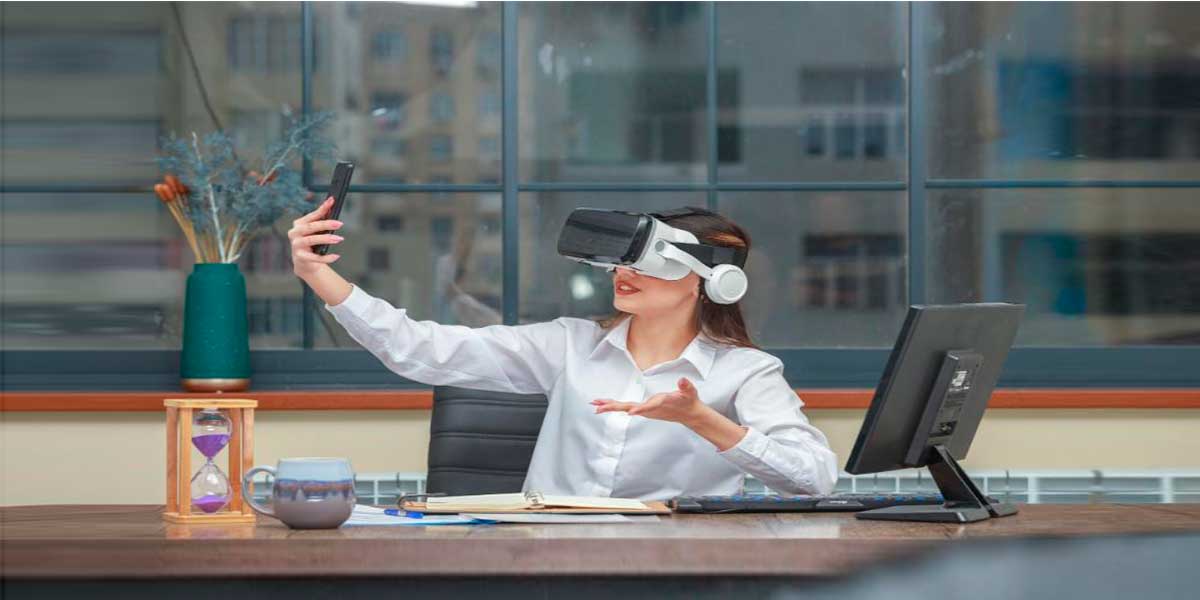
- Augmented and virtual reality
- Blockchain
- Internet of Things (IoT)
- Advanced robotics
- 3D printing
- Advanced cybersecurity
- biometrics
- Quantum computing
- Renewable energy
- 5G and Wi-Fi 6 networks
- Digital payment systems
- Autonomous cars
- Nanotechnology
- solid state batteries
- Cloud data storage
- Precision farming
- Personalized medicine
- Gene editing
- Smart manufacturing
- Drones
- mixed reality
- High-speed satellite broadband
- Robotic exoskeletons
- Personal assistance systems based on artificial intelligence.
Keep in mind that these are just some of the emerging technologies and there is no guarantee that they will all be successful in the market.
In addition to the technologies I mentioned earlier, there are other emerging technologies that may also have a major impact on the future, including:
- Big data and data analytics: the ability to process large amounts of data and obtain valuable information from them can be very valuable for many industries.
- Robotic process automation: Robotic process automation (RPA) allows companies to automate repetitive processes and increase efficiency.
- Spatial reality: Spatial reality refers to the ability to digitize the physical world and represent it in the virtual world. This technology can have applications in areas such as architecture, construction, and design.
- Food printing: Food printing can be an efficient and sustainable way to produce personalized and nutritious food.
- Fusion energy: Fusion energy is a potentially safe and clean way to produce energy from nuclear fusion.
- Biotechnology: Biotechnology can have applications in areas such as medicine, agriculture, and food production.
- Edge computing: Edge computing refers to the ability to process and store data near the edge of the network, which can increase the speed and efficiency of data processing.
- Industrial Internet of Things: The Industrial Internet of Things (IIoT) can enable companies to improve efficiency and reduce costs by monitoring and controlling industrial processes in real time.
- Decentralized renewable energy: Decentralized renewable energy can enable communities to produce and store their own energy, which can be more sustainable and economical than centralized energy systems.
These are just some of the emerging technologies that could have a major impact on the future. It's important to keep in mind that the success of these technologies depends largely on how they are implemented and used in the real world.
Here are some other emerging technologies that may also have a major impact in the future:
- Augmented reality for e-commerce: Augmented reality can allow consumers to experience products and shop online in a more immersive and personalized way.
- Bioplastics: Bioplastics are a more sustainable alternative to traditional plastics and can have applications in a wide variety of industries.
- Urban air transport systems: Urban air transport systems, such as flying taxis, can allow people to travel faster and avoid traffic in cities.
- Creative artificial intelligence: Creative artificial intelligence can enable machines to autonomously create art, music, and other forms of creative expression.
- Human organ printing: Printing human organs can revolutionize medicine by enabling the creation of customized organs and reducing reliance on organ transplants.
- Quantum teleportation: Quantum teleportation can allow the instantaneous and secure transfer of information across great distances.
- Autonomous delivery robots: Autonomous delivery robots can enable more efficient and sustainable package delivery in urban areas.
- Smart buildings: Smart buildings can use technology to improve energy efficiency and occupant comfort.
- Driverless autonomous vehicles: Driverless autonomous vehicles can revolutionize transportation by enabling greater efficiency and reducing the number of car accidents.
- Virtual reality for education: Virtual reality can enable a more immersive and personalized education by allowing students to experience concepts and environments in a more interactive way.
These are just some of the emerging technologies that could have a major impact in the future. As always, the success of these technologies will depend on how they are implemented and used in the real world.


